A studio at the edge.
At the intersection of artificial intelligence, industrial design, and hardware engineering — building physical products where AI is embedded in the object itself.
The intersection is the work.
Most studios use AI to speed up their workflow — generating renders faster, automating documentation, streamlining communication. That's not what this studio does. Here, AI lives inside the product. It's embedded in the sensor logic, the firmware behavior, the way the object responds to the world around it. The intelligence isn't in the process. It's in the thing.
Hardware and software aren't separate phases. The enclosure, the electronics, the UX, and the firmware are designed as one conversation — not handed off between departments. When the industrial design changes, the sensor placement changes. When the AI model shifts, the form factor adapts. Everything moves together because it was never separate to begin with.
We build our own products first. That's not a slogan — it's a filter. The studio's primary work is first-party: products conceived, designed, and prototyped in-house. External collaboration happens selectively, and only when the problem is genuinely interesting and the constraints are real.
How the work gets done.
AI inside the product, not just in the workflow
Intelligence is embedded in the object — in its sensors, firmware, and behavior. AI isn't a design tool here. It's a design material.
Hardware and software as one conversation
Enclosure, electronics, UX, and firmware are designed together from day one. No handoffs between disciplines. Everything moves as one.
Build own products first
The studio's primary output is first-party work. Products conceived, prototyped, and shipped in-house. External work is selective, never the default.
Publish what gets discovered
Process is documented in real time. Failures included. In-progress is a feature, not a liability. The work is open because the learning should be too.
North star: aerospace and interplanetary design
The long-term trajectory is extreme-environment product design. IoT today. Aerospace tomorrow. Every project moves the studio closer to that edge.
This studio uses artificial intelligence as a creative force in the design of physical products. Not as a shortcut. Not as a gimmick. As a material — the same way a designer thinks about aluminum or injection-molded polycarbonate.
The process is not polished. It's documented. Experiments are shared before they succeed. Failures are recorded because they contain more information than wins. The studio exists at the edge of what's possible — and the only dishonest part of working there is pretending you already know what you're doing.
We don't wait until the work is finished to show it. We publish what we discover along the way — because the people who will build the future of physical products deserve to see how it's actually done. Not the highlight reel. The real thing.
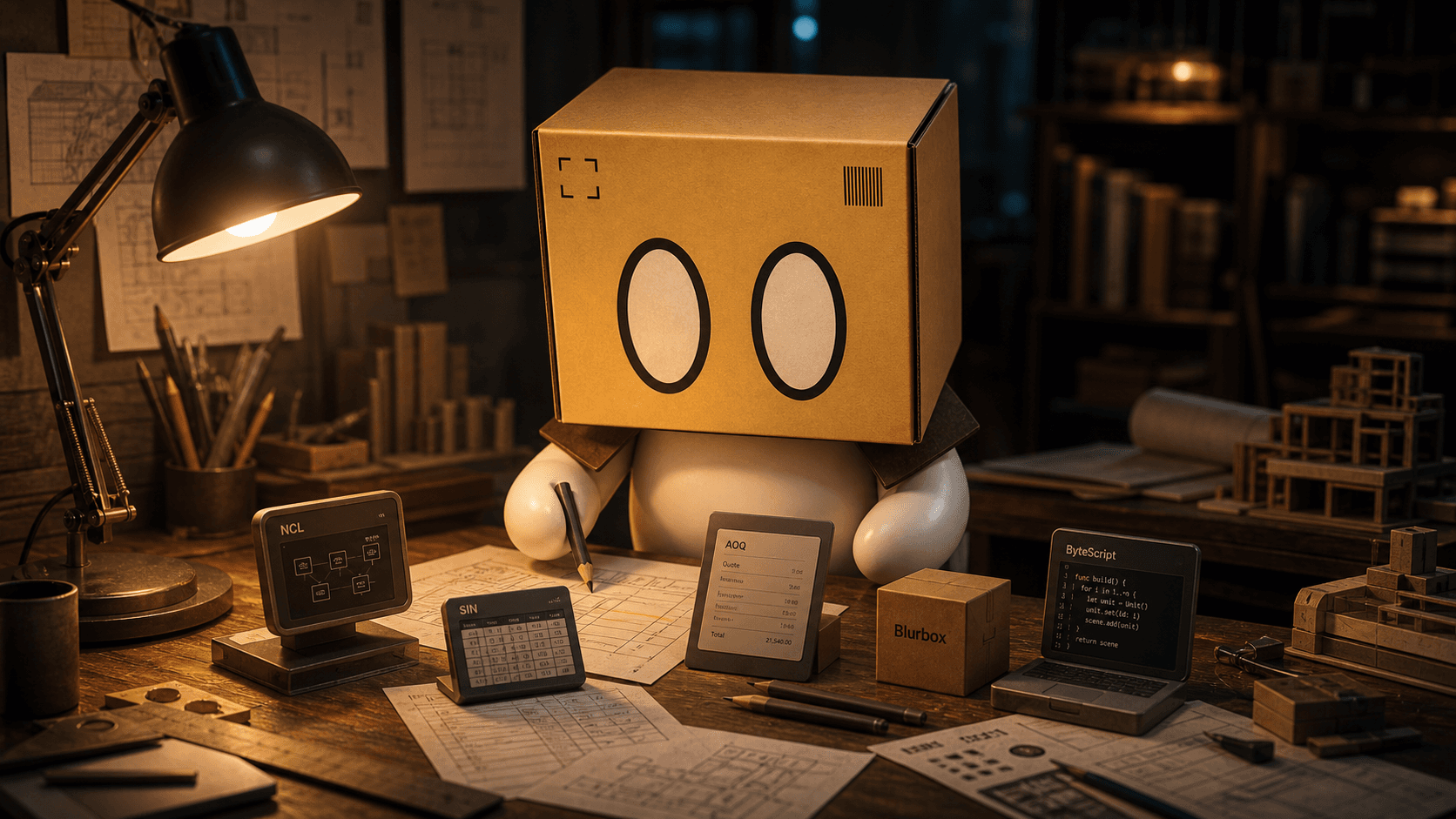
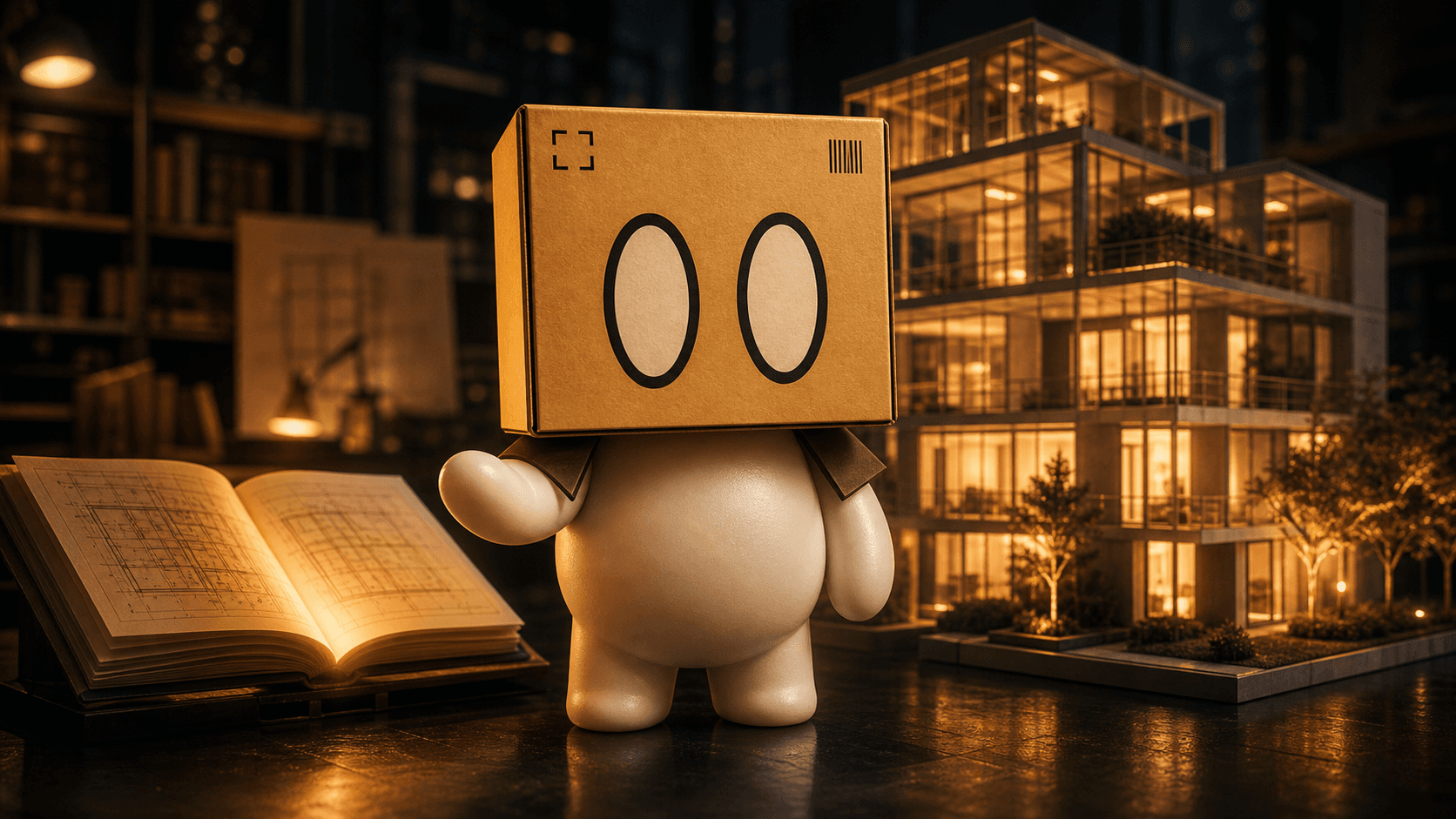
Meet Box.

A cardboard box head with oval eyes. Curious, committed, always in motion. No mouth — listens more than it speaks.
Box is not a mascot in the usual sense. It's the face of the studio — the character that shows up in documentation, walkthroughs, build logs, and product photography. It represents the ethos: start with something simple, make it intelligent, and never stop iterating.
You'll see Box everywhere the studio's work lives. On the site, in the lab notes, on social media, and eventually on the products themselves. It's the through-line — the constant in a studio that's always building toward the next thing.
The studio.
Box Creative Studio is a solo-founder operation based in Miami, FL. The founder's background spans industrial design and artificial intelligence — two disciplines that rarely share a room but define everything the studio builds.
The studio is currently in early prototyping on its first product: an AI-integrated IoT device designed from the ground up as a single system — enclosure, electronics, firmware, and intelligence. No handoffs. No silos.
The long-term vision is aerospace and interplanetary product design. That starts here, with grounded work, buildable prototypes, and honest documentation of everything learned along the way.